Study Palestinian Arabic Programs in the West Bank: As one of the most spoken languages in the world and an official UN language, Arabic is becoming increasingly popular among non-native speakers. However, what some people might not know is that there isn’t just one kind of Arabic!
Like many languages, Arabic is spoken differently depending on where you are. Egyptian people have a very musical dialect that is widely understood due to their popular movies and TV shows. Their French colonial past heavily influences Moroccan and Tunisian Arabic, and Gulf Arabic is what you’ll hear in Saudi Arabia and Qatar. Palestinian Arabic has its own unique qualities, which we’ll talk about later.
So, who should study Palestinian Arabic? There are several reasons why someone might want to learn this beautiful and interesting language. You might be looking to travel in the region and want some practical language skills to get around. You might be a researcher interested in religion, geopolitics, or anthropology, or someone looking to build their language skills to work in the region.
You might have Arab heritage and want to connect with your family’s language. Alternatively, if you have a foundation in Modern Standard Arabic, you might want to learn a dialect to improve your communication with people. Whatever your reason, having Arabic is a beneficial asset and a delightful thing to do.
So, how to get started on your Palestinian Arabic learning journey? Read on to find out more!
Table of Contents
What is Palestinian Arabic?
Modern Standard Arabic (MSA) is the universal Arabic used primarily in news and official documentation. This is good to know, as it gives a strong foundation of Arabic grammar, and it’s so widely used. However, it’s not the Arabic that people use to speak with. To have conversations with people in everyday settings, you’ll need to learn a dialect.
Palestinian Arabic (Ammiyah) is a sub-dialect of the Levantine Arabic spoken across Syria, Lebanon, Jordan, and the Occupied Palestinian Territories. Of all the dialects, it has the most similarities with Modern Standard Arabic, so it’s not too difficult to go from one to the other. This makes Palestinian Arabic a very useful dialect to learn for those who might want to speak with people and have more formal Arabic for other uses.

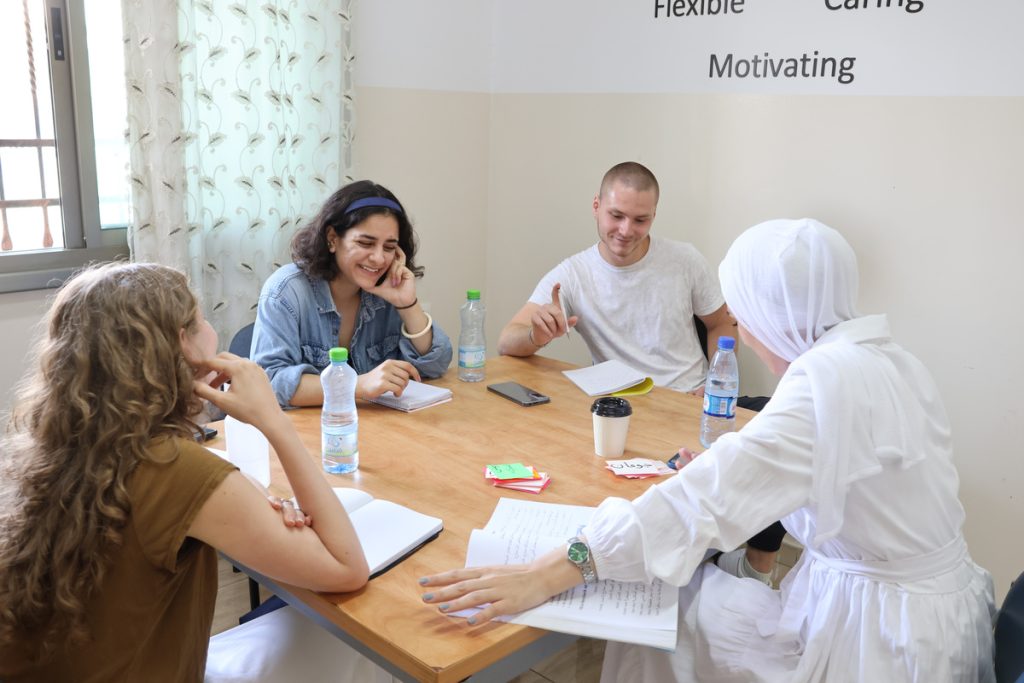
Within Palestinian Arabic, there are also different variations of the way the language is spoken. For example, there are differences between how people speak in Gaza and the West Bank. Despite being geographically so close together, the blockade on Gaza means the population there has been isolated and, therefore, developed their own ways of saying things. There are also differences in the way Palestinian Arabic is spoken between cities and rural areas within the West Bank. Another difference is the diaspora population, whose spoken language is influenced by the country they live in.
Even within each dialect, there are many ways to speak, so the best way to help you along with your language learning goals is to find a good teacher who will be able to guide you.
Key Features of Palestinian Arabic
What is different about Palestinian Arabic from other dialects? Lots!
The first significant difference is in pronunciation. The spoken Palestinian Arabic language likes to simplify some of the formal language’s more difficult sounds. For example, in MSA, the letter ‘qaf’ is pronounced somewhere between a ‘q’ and a ‘k’ caught at the back of your throat. In Palestinian Arabic, this is simplified to a glottal stop, where you simply leave a space instead of making the sound. Other letters like letter ‘dhal’ and ‘thal’ are modified to a simple ‘z’ sound. The ‘th’ sound of ‘tha’ is simply pronounced as a ‘t’.
Another thing that makes Palestinian Arabic unique is its vocabulary. The Modern Standard ‘dhab’ for ‘I want’ becomes a simple ‘bidee’. The letter ‘sheen’, which has a ‘sh’ sound, can be used as a tool of negation, so you can easily say ‘I don’t want’ by saying bideesh. ‘Katheer’ for ‘lots’ in MSA becomes ‘kteer’ in Palestinian Colloquial, and you can use ‘kteer’ multiple times in a row to express a greater degree of ‘lots’.
Finally, Palestinian Arabic has been built on its unique geographic location and history. One of its most distinctive features is its rich blend of Canaanite, Aramaic, and Arabic roots, with traces of Turkish, Persian, and even some Italian from Ottoman and European interactions. Palestinian Arabic also includes some unique expressions and proverbs that reflect the resilience of its speakers, making it a reflection of Palestinian identity.
Types of Palestinian Arabic Programs
One of the hardest parts about learning a new language is getting started. You know what you want to do, but you might not know exactly how to go about it. The first important step is to decide what kind of Arabic program might be the next option for you:
Online Courses
For those who can’t travel for immersive learning in an Arabic-speaking country, you can learn from anywhere with virtual one-on-one or group lessons. This is a great way to build your skills, no matter your schedule!
Intensive or Super-Intensive Courses
If you’re learning Arabic for a specific purpose or with a specific timeline in mind, an intensive or super-intensive course might be the right choice for you. These courses ensure maximum exposure and real acceleration toward your language-learning goals.
Study Abroad Immersion Programs
By far the best way to learn Arabic is through full immersion in an Arabic-speaking country. If available, you can learn Arabic in numerous places in Palestine while fully integrating into the community.
Now that you know what kind of Arabic course you want, you might still be unsure where to find it. The next section outlines some of the key resources you can use to start your Palestinian Arabic learning journey.
Where to Learn Palestinian Arabic
It can be a little harder to find resources to study Palestinian Arabic than for other dialects, such as Egyptian.
However, we’ve gathered some of the best in-person and online resources we know of to help get you started:
In person
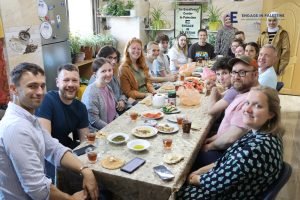
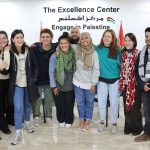
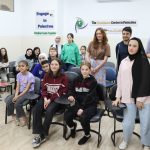
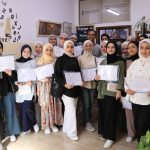
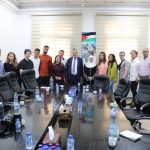
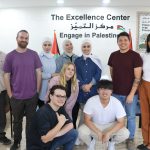
The Excellence Center Palestine is situated in Hebron, just off lively Ein Sara Street. We have been in operation since 2011, welcoming over 1,000 students and volunteers to spend time with us. We offer a wide range of Arabic programs, including Palestinian Arabic, Modern Standard Arabic, and Levantine Arabic, as well as a variety of intensity levels. Our courses can be customized to suit learners’ goals, and we welcome anyone from complete beginners onward.


The Arabic program at Birzeit University runs during Spring and Fall Semesters, with a summer intensive program in the middle of the year. They offer Modern Standard Arabic, Colloquial Arabic, and some specialised short courses like Arabic Poetry. Birzeit University was established in 1924 and provides a variety of interesting classes for prospective students.
Online courses and digital resources
If you can’t study in person, there are online resources to help you get started with your Arabic learning!
Online programs with Engage in Palestine:
Just like our in-person programs, you can study Palestinian Arabic from anywhere, whether you’re a complete beginner or more advanced, using just a device and a good internet connection. The benefit of online courses is that you still get an experienced teacher to guide you, but you can easily fit online classes around your personal schedule. See the price list here for your online study options at Engage in Palestine.
Arabic with Maha:
Maha is an engaging video creator with excellent teaching skills. She has a variety of videos specifically on Palestinian Arabic – everything from useful vocabulary to grammar. And, her videos are all free to access! You could use this to get some of the basics down, or as a supplement to another online course.
Kaleela or Mango App:
Most apps that offer Arabic (looking at you, Duolingo) don’t offer courses by dialect. A couple of exceptions to this rule are Kaleela and Mango. These interactive apps help to develop your language learning skills across reading, writing, speaking, and comprehension. Both apps offer a free option to test the platform, but the best value is found in a paid subscription.
Immersive Learning: Studying Arabic in Palestine
Where to base yourself?
If you can come to Palestine to study Arabic, it’s going to be an incredibly enriching experience. The first thing to mention is the setting. For a small area, the West Bank has a diverse range of cities, all with their own pros and cons for language learning:
- Hebron: The economic hub of the West Bank, Hebron is an incredibly friendly place with a vibrant shopping and restaurant scene, and many sites with historical and religious significance. Study Arabic in Hebron for full cultural immersion.
- Ramallah: A more modern and cosmopolitan city, Ramallah is the NGO capital of the West Bank. It boasts many cultural institutions like the Mahmoud Darwish Museum and the tomb of Yasser Arafat. Study Arabic in Ramallah to be in the political center of Palestine.
- Nablus: Tradition meets community in this northernmost city in the West Bank. Nablus is a bit quieter than the other options, and is known for its lovely local markets and delicious kunefe (insider tip – buy the kunefe at night!). Study Arabic in Nablus for a more traditional environment.
- Bethlehem: One of the most religiously significant cities in the world, Bethlehem is situated just south of Jerusalem. In this beautiful city, you can visit sites like the Church of the Nativity (where it’s said Jesus Christ was born) and the Milk Grotto. Learn Arabic in Bethlehem to explore historical sites and travel easily to Jerusalem.
The Benefits of Immersive Learning
What are the benefits of learning in an immersive environment?
First, you help to accelerate your language learning by using it in everyday situations and with everyday people. Whether you’re just ordering a coffee or talking about the weather with a friendly local, applying the language you’ve learned right away helps to embed it even further.
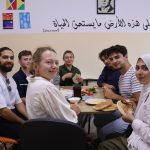
Another advantage of immersive learning is that it immerses you in the local culture. Palestine is a beautiful land with a long history and a lot of religious significance (and great food!). Language and culture go hand-in-hand, so this helps you to have a rich exchange experience as well as deepen your understanding of Arabic.
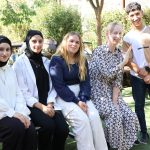
Finally, immersive learning helps you to build friendships with native Palestinian Arabic speakers. This will help broaden your vocabulary to talk about a range of different topics and to practice listening and understanding the local accent. The benefits of local friendships are lasting, as you not only meet great people who will make an impact on your life, but you’ll also have a way to practice your Arabic once you return home.
Wherever you choose to study in Palestine, there is no doubt that the benefits of immersive learning are immense.
List of Study Palestinian Arabic in the West Bank, Palestine Programs
Here you can find the list of our intensive Palestinian Arabic programs as well as the online courses:
1. Intensive Arabic Language Courses
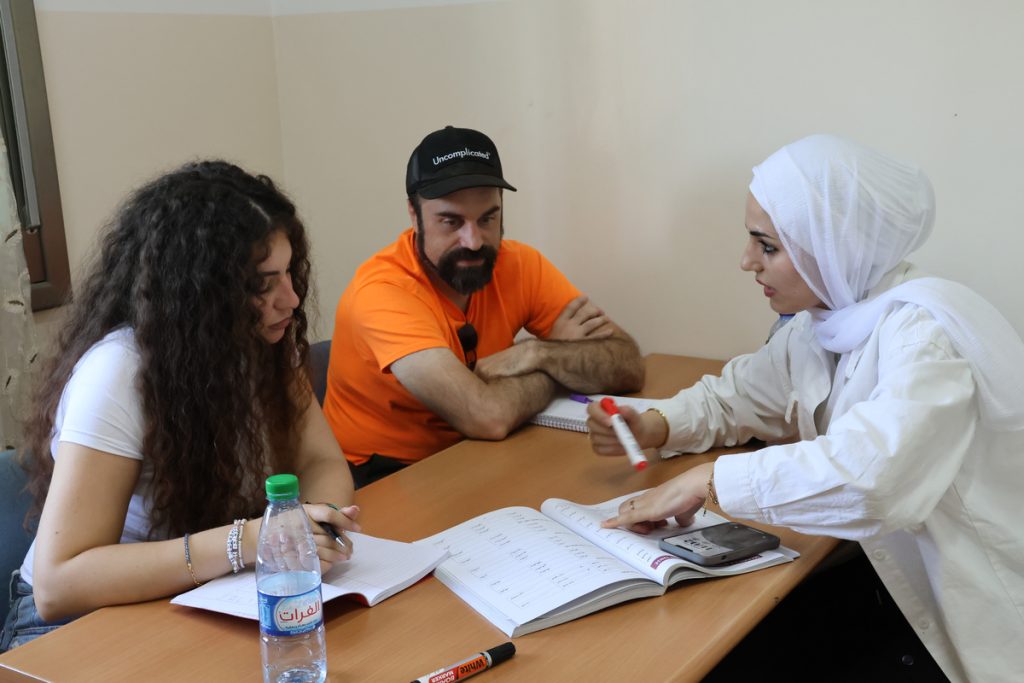
Our Intensive Arabic Language Program in Palestine is designed to accelerate Arabic learning through complete language and cultural immersion. We offer year-round classes in Palestinian and Levantine Colloquial Arabic (Ammiyya) and Modern Standard Arabic (MSA). Our courses are flexible, ranging in duration from one to thirteen weeks, and are available throughout the year during spring, summer, fall, and winter.
2. Intensive Summer Arabic Program in Palestine
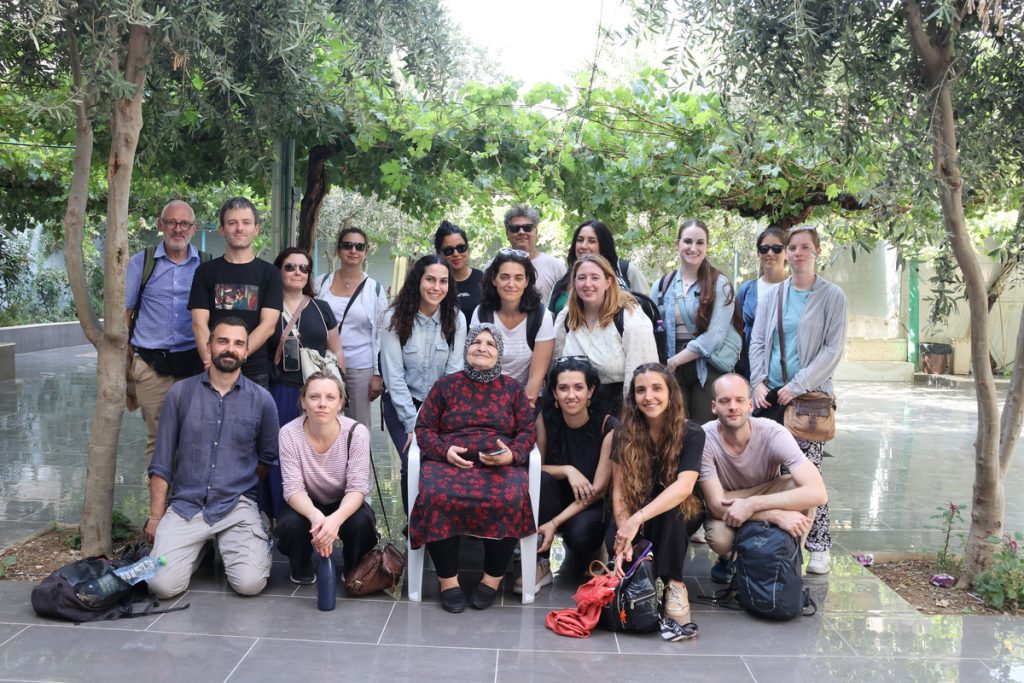
Summer Intensive Arabic Program: If you’re seeking an immersive Arabic education this summer, look no further than our Summer Arabic Immersion Program. Visiting nearby refugee camps and Palestinian communities will offer a unique opportunity to understand the current human rights situation faced by Palestinian refugees.
3. Study Palestinian Colloquial Arabic Program

The Study Palestinian Colloquial Arabic program offers a unique opportunity for individuals seeking to learn the colloquial Palestinian dialect of Arabic (Ammiya or Levantine dialect), connect with the broader Palestinian diaspora, and immerse themselves in the vibrant culture of Palestine and the Levant region.
4. Study Arabic Online Program
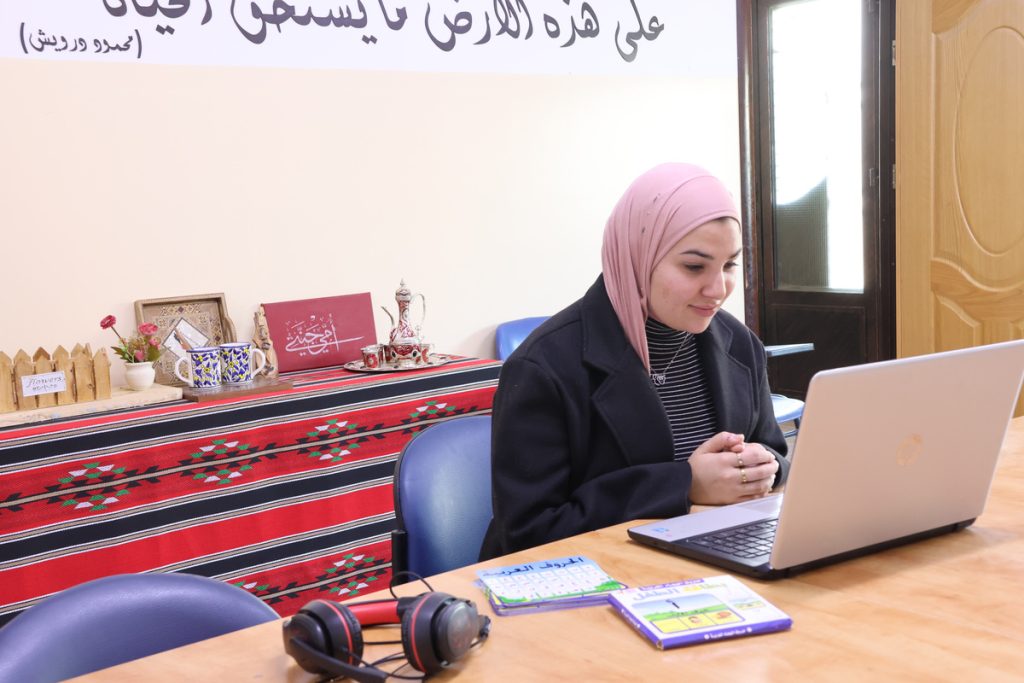
Study Arabic Online Program: In addition to our in-person programs at the center, Engage in Palestine offers online Arabic language classes in Modern Standard, Levantine (Shami), and Palestinian Arabic (Ammiya). Depending on your intended study purpose, each online Arabic program has its advantages; colloquial variants are better suited for those simply traveling and conversing, while Modern Standard is ideal for those needing Arabic professionally.
Reviews from Former Students
Learning Palestinian Arabic with Engage in Palestine is the best thing you can do to support your language learning goals. But don’t just take it from us, hear from some of our previous students from online and our immersive in-person courses.”
Our in-person classes:
Alex from the United Kingdom says: “The Arabic classes were brilliant. My teacher, Saja, was brilliant! I was a complete beginner, and the amount of material we covered in two months was incredible. I will spend at least six months after this reviewing what I have learned already to consolidate! I learned so much, and I have gained confidence in reading, writing, and speaking. Saja was very kind, patient, and knowledgeable. And I think she also knows more about the English language than I do. She pitched her teaching at my level and was very encouraging. I couldn’t have asked for better quality teaching.”
Geneveieve from the United States says: “I went to Hebron for a month in December 2024 and learned Arabic with Haya. I had just finished Arabic 101 at my university, but felt like I barely learned anything. Haya taught me more in 4 weeks than I learned in that entire 10-week course at my university. The book she uses for Palestinian Colloquial Arabic has lots of helpful exercises and explanations, and Haya gives very clear explanations when you get something wrong.”
Our Online Classes:
Ben from Canada says, “I highly recommend Engage in Palestine for learning Arabic. I have been studying with Ibrahim for half a year, and I am really enjoying the lessons. Every lesson is carefully planned based on my level and learning goals. I feel that I am seeing a lot of improvement and am grateful for Ibrahim’s strong and supportive instruction. He is a great teacher.”
Natalie from Germany says: “I enrolled in the Palestinian Arabic class, and it was the best decision I made during my Arabic learning journey so far! My teacher, Doha, is very experienced and professional; she creates a challenging and engaging learning atmosphere. The price is more than fair for the quality of teaching received, including all the materials. The administrative staff was also very supportive and took time to answer all my questions. All in all, I can only recommend this course to anyone interested in starting to learn or wanting to improve their Arabic skills!”
Conclusion
Learning any language is a great adventure, and Palestinian Arabic is no exception! Whether you’re studying in person or online, this dialect is a great way to reach your language goals, learn more about the Palestinian history and culture, and make new friends.
Engage in Palestine makes it easy for people to come and learn Arabic in Palestine. Our range of Arabic courses suits learners of all levels, and our expert teachers make language learning a joy. Want to learn more? Feel free to reach out to our friendly team at Info@ecpalestine.org.
Contact Us
Should you have any questions, please do not hesitate to contact us at:
WhatsApp: +972 599 479 880
Website: https://ecpalestine.org/
EC Website: https://excellencenter.org/
Instagram: https://www.instagram.com/excellence.center
Facebook page: https://www.facebook.com/ExcellenceCenter
Tags: Learn Palestinian Arabic dialect, Online classes for Palestinian Arabic, Palestinian Arabic language course, Study Palestinian Arabic Online